

Eye pain has a way of making everything stop. Whether it’s a sharp sting, a dull ache, or sudden pressure, it’s hard to ignore, and it shouldn’t be. The challenge is figuring out whether what you’re feeling is something minor or a sign that real damage is happening.
Not every case of eye pain is a medical emergency, but some symptoms mean you should act within minutes, not days. Treat eye pain as an emergency if it’s severe, sudden, or accompanied by vision loss, nausea, or flashes of light. While some discomfort stems from minor irritants, persistent or intense pain can signal a serious condition that requires immediate professional evaluation.
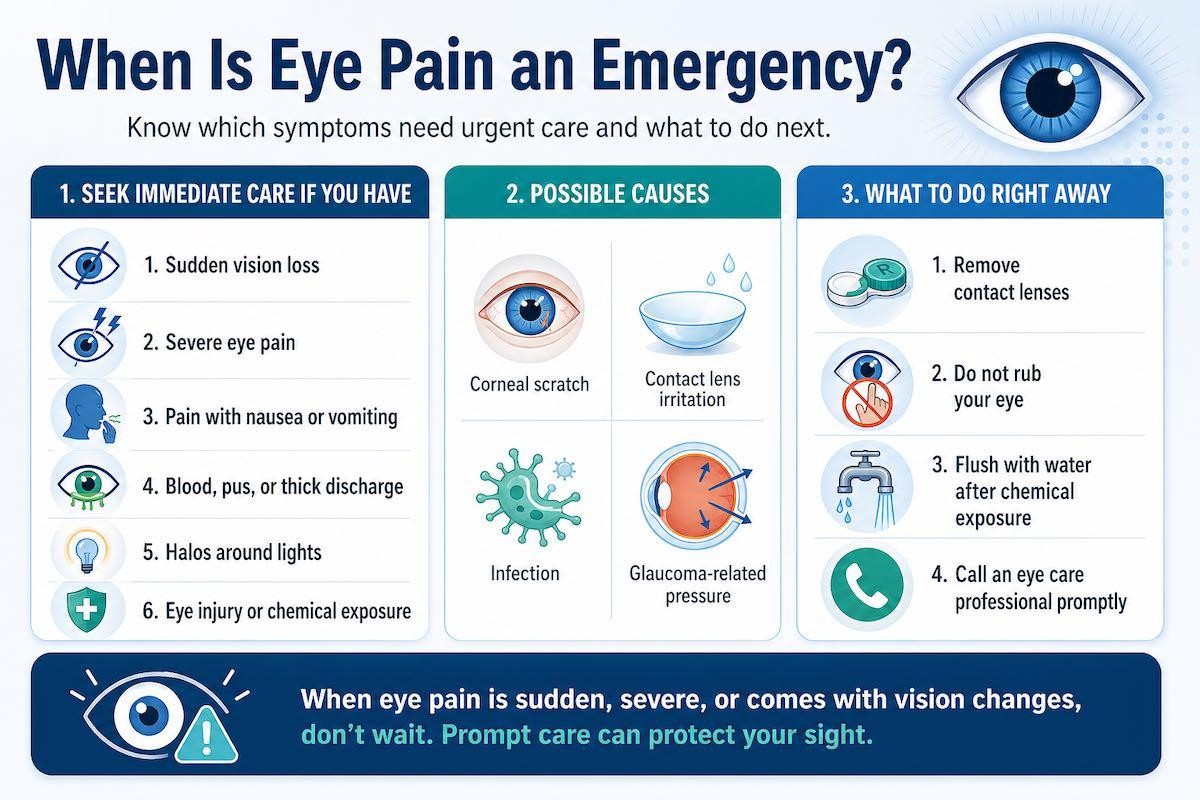
If you have sudden vision loss, severe eye pain, chemical exposure, eye trauma, or pain with nausea or vomiting, call an eye care professional immediately or seek emergency medical care.
Key Signs Your Eye Pain Is Serious
Pay close attention to how your eyes feel and look to determine if you need urgent care. Some symptoms indicate that damage is happening quickly, so acting within minutes can make a significant difference.
Seek professional help immediately if your vision changes suddenly, blurs, or disappears even briefly. Don’t wait to see if it gets better on its own. Sudden vision changes can point to conditions like a detached retina or acute glaucoma, both of which respond better to early treatment.
Severe eye pain paired with nausea, a pounding headache, or fever is another combination that needs same-day or emergency care. This combination often means pressure is building rapidly inside your eye. Also, treat any blood, pus, or thick discharge as an urgent matter, as these signs suggest an infection or injury that can worsen without intervention.
Seeing halos around lights when you didn’t before is something worth taking seriously, especially if it comes on suddenly.
If your eye won’t open fully or you can’t move it in a normal direction, that’s not something to sleep off. The same goes for swelling in or around the eye area that appears quickly. These signs may point to infection, inflammation, or injury that needs prompt attention from a professional.
Common Causes Behind Sudden Eye Pain
Identifying the source of your pain can help you understand the urgency of the situation.
Surface-Level Eye Pain
Sometimes eye pain starts at the surface. A speck of dust or sand that gets trapped under your eyelid can feel like something much bigger. Flush your eye with clean water as a safe first step, and avoid rubbing it, which can make the irritation worse.
Corneal scratches happen more often than most people realize. A fingernail, a pet, or even a contact lens can leave a small abrasion on the clear front surface of your eye. These scratches sting and can make your eye sensitive to light. They heal with proper care, but they should be looked at.
Overwearing contact lenses or using them incorrectly is another common source of eye pain. Your eyes need oxygen, and lenses that stay in too long can block that supply. Remove your lenses right away if your eyes hurt and consult a professional.
Pain That Comes From Inside the Eye
Glaucoma-related pain can feel like a deep ache or heaviness inside the eye. This discomfort doesn’t come from the surface, so flushing or resting your eyes won’t provide relief.
Infections that spread into the eye tissue can move fast and become serious. What starts as redness or irritation may develop into something more significant without treatment. Eye trauma, even from what feels like a minor bump or impact, can also cause internal damage that isn’t immediately visible.
Symptoms That May Seem Minor
Light Sensitivity
Light sensitivity can sometimes result from a long day in front of a screen, but when it occurs with redness, pain, or blurred vision, call an eye clinic. This combination can point to inflammation inside the eye, known as uveitis.
Double Vision
Double vision is one of those symptoms that should never be brushed aside. Even if it comes and goes, it can signal a problem with how your eye muscles or nerves are functioning. Reach out for a same-day evaluation if this happens to you.
Headaches with Visual Symptoms
A headache by itself may not seem related to your eyes, but when it comes with flashing lights or a blind spot in your vision, that changes things. These visual disturbances can point to a retinal issue or other pressure-related problems.
Eye pain that comes with a headache can also be a sign of elevated pressure inside the eye. This pairing deserves more than a pain reliever and a nap. An eye exam can help identify whether the pressure in your eye is within a normal range.
What to Do When Eye Pain Strikes
Follow these steps to protect your vision when discomfort occurs.
- Remove your contact lenses if you’re wearing them. Don’t push through the discomfort, as keeping lenses in can make the situation worse.
- Avoid rubbing your eye, even though the urge is strong. Rubbing can push a foreign object deeper or increase pressure.
- If a chemical gets in your eye, flush it immediately with clean water for at least 15 minutes, then seek medical attention right away.
- Seek care right away for severe symptoms. Skip the wait-and-see approach and call a clinic directly.
Protect Your Vision with Prompt Care
Don’t ignore eye pain or wait for it to go away on its own. When your vision is at stake, taking quick, decisive action is the best way to help your eyes stay healthy and comfortable.
During clinic hours, call us at Northern Lights Eyecare for emergency eye care. If symptoms are severe, happen after hours, or you need immediate medical attention, seek emergency care right away.